- Insidr.ai Newsletter
- Posts
- Top AI Advancements, Guides & Tools August 22nd 🙋🏼
Top AI Advancements, Guides & Tools August 22nd 🙋🏼
Top AI Advancements, Guides & Tools August 22nd 🙋🏼

insidr.ai
August 22, 2024
Top AI Advancements, Guides & Tools August 22nd 🙋🏼♂️
Hey! Hope you had a great week so far. We got some more AI on the program for you.
The free AI community and AI crash course is progressing daily. It won’t be long before we are ready to launch, and you will be the first to know! Stay tuned.. 😄
Let’s get to it!👇
💡In this newsletter:
AI Guide: AI Fundamentals - What is AI really?
AI Tools: 5 AI tools for AI Agents.
Poll: 😎
AI News & Trends: NVIDIA news on Blackwell development, OpenAI with AI content detectors, and Google’s Gemini.
🛠️ Top AI Tools This Week
👉 Find all the best AI tools in the: AI tools directory.
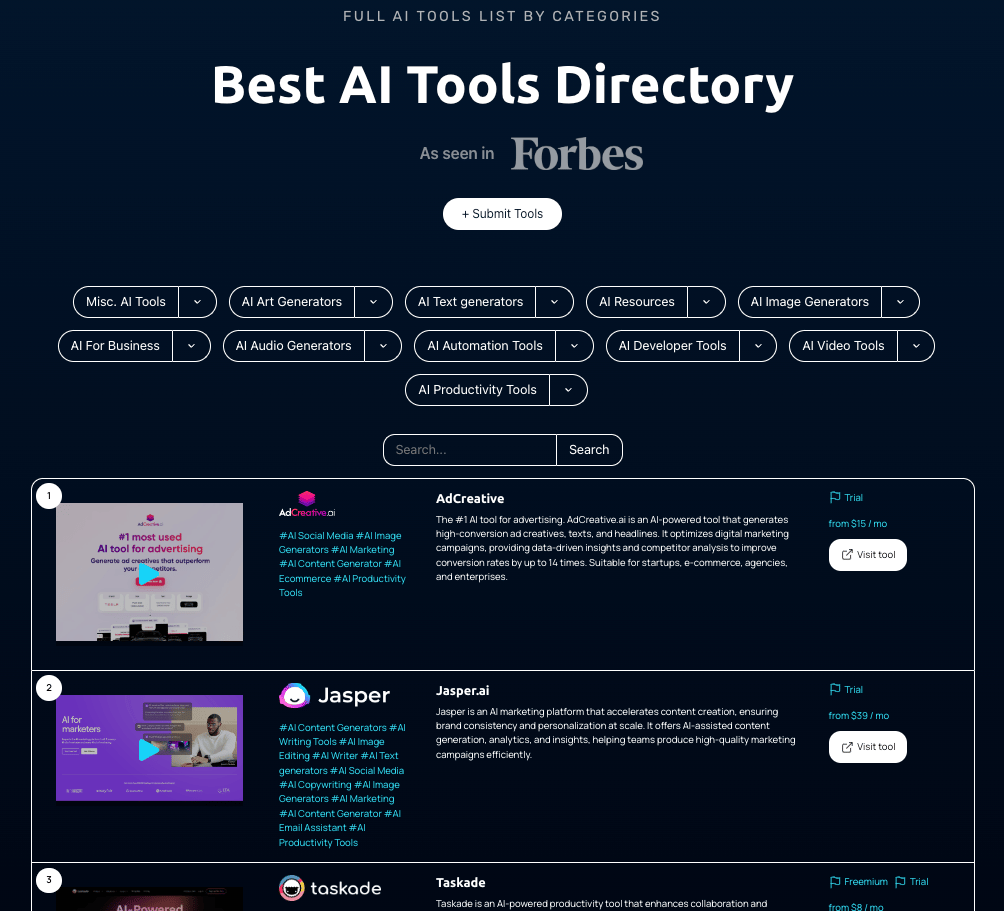
🎥 5 AI Tools to Create Custom AI Agents
💡 AI Agents has become popular, and for a good reason. With the right agents, you can automate a lot of processes and save. a lot of time.
Here are 5 AI Agent tools for you to try.
🤖 Dante AI
Dante AI is your ultimate partner that unlocks remarkable, hyper-personalized AI interactions. Insert your website URL and Dante can create a custom agent for you.
🙋🏼♂️ Taskade
Taskade is an all-in-one productivity suite and workspace, where you can create AI agents, automations, manage tasks and projects, AI chat, and much more.
🔥 Botpress
The Complete AI Agent Platform - an all-in-one platform for delivering chatbots powered by the latest LLMs. Integrate with your favorite tools.
🗣️ Olympia
AI-powered virtual staffing tool tailored for solopreneurs and bootstrapped startups. Get smart and AI-powered consultants for your work.
🎥 Stratup AI
AI-Powered Startup Ideas and Tools to Fuel Your Entrepreneurial Journey. Generate ideas and get assistance for your startup and business.
Do you know what AI actually is?-> What it's made up of, how it works and how the different subfields sit in relation to each other? |
🤖 AI Fundamentals: What Is AI Really?
💡 AI is a term that is being thrown around a lot these days, but most people really know what AI is and what it is built up of.
Since we are working on a free AI Crash Course for you, here is a sneak-peek from one of the foundational modules about what AI actually is!
What is AI?
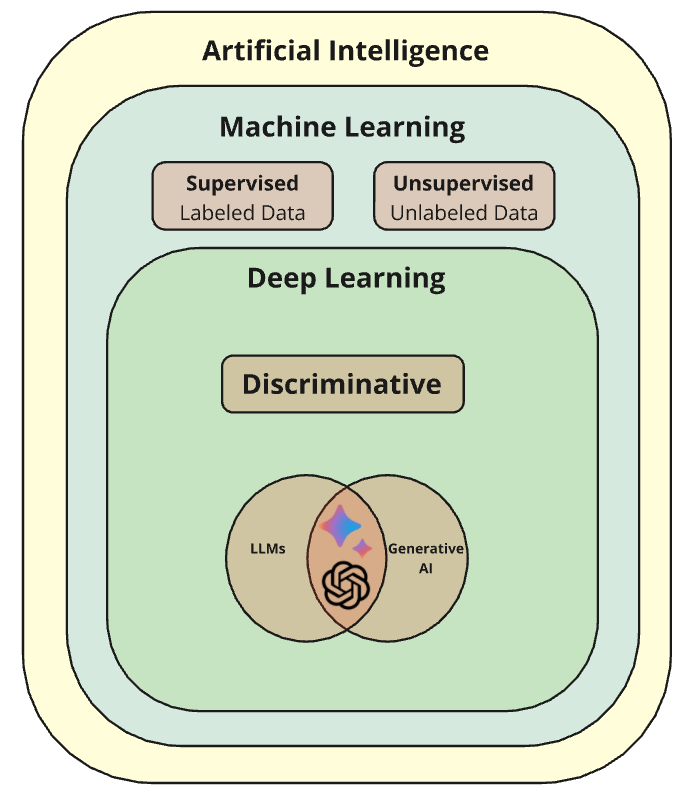
Artificial Intelligence (AI) is the science of creating machines that can mimic human intelligence. This includes tasks like learning, problem-solving, decision-making, and pattern recognition. Think of AI as a broad field, much like physics, that aims to build systems capable of intelligent behavior.
Key Subfields in AI
Machine Learning (ML):
Machine Learning is a core component of AI. It's a method where a model is trained using data to make predictions or decisions without being explicitly programmed for the task. For example, ML powers Netflix's recommendation engine, which suggests movies based on your past viewing history. ML models can be:Supervised Learning: Uses labeled data to train models. For instance, an email spam filter is trained on emails labeled as "spam" or "not spam."
Unsupervised Learning: Analyzes unlabeled data to find patterns. For example, grouping customers based on purchasing behavior without predefined categories.
Deep Learning and Neural Networks:
Deep Learning is a more advanced type of ML that uses artificial neural networks, inspired by the human brain. These networks have multiple layers of nodes (neurons) that process data, enabling tasks like image recognition or fraud detection. For example, in healthcare, deep learning can analyze medical images to identify diseases with high accuracy.Discriminative vs. Generative Models:
Deep learning models can be categorized into:Discriminative Models: These are focused on classification tasks, like distinguishing between a cat and a dog in an image.
Generative Models: These create new content based on learned data, such as generating a new image from a text description. For instance, DALL-E generates images from text prompts, creating entirely new visuals based on the patterns it has learned.
Large Language Models (LLMs):
LLMs are specialized deep learning models trained on massive datasets and fine-tuned for specific tasks. They can generate human-like text and are used in chatbots, like those used by online retailers for customer support. An LLM can handle various tasks such as answering questions, summarizing documents, and even engaging in detailed conversations.
Generative AI Models
Generative AI models are named based on their input and output, such as:
Text-to-Text (T2T): Like GPT-4, which generates text from text input.
Text-to-Image (T2I): Like DALL-E, which creates images from textual descriptions.
Text-to-Speech (T2S): Converts text into spoken words, useful in virtual assistants.
This overview is a foundational understanding of AI, its subfields, and how these technologies work together to power the tools and applications we use daily!
👉 Stay tuned for more practical understanding lessons in the coming weeks!
🙋🏼♂️ AI News and Advancements
Here are some of the most interesting AI developments this week:
NVIDIA faced a setback as the release of its "Blackwell" B200 AI chips was delayed by three months due to a design flaw, though analysts believe this won't significantly affect NVIDIA's market dominance.
OpenAI developed a tool to detect AI-generated content but withheld its release for further refinement and financial considerations.
Google re-hired engineers from Character.AI to bolster its AI capabilities, and NVIDIA partnered with Mistral AI to launch the powerful NeMo AI model with advanced reasoning and coding features.
Google demonstrated its new AI assistant, Gemini, emphasizing its advanced multimodal features, which are integrated into Pixel phones. (MarketingProfs).
Sahara AI, a startup focusing on decentralized AI networks, raised $43 million. The platform aims to challenge centralized AI models by rewarding data contributors and AI trainers, signaling a shift towards more ethical AI practices (Stanford AI Index)
Have a great weekend, and we’ll talk soon 🚀
Best Regards,
Lasse Linnes, CEO Insidr.